

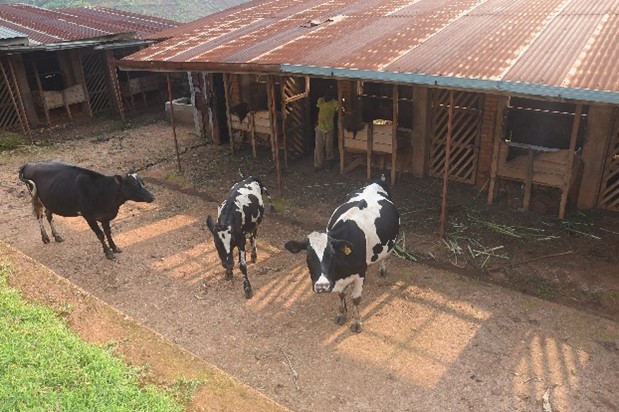


Brief Report on Investment Forum Sida-PFAN Initiative for Climate & Clean Energy Financing 29-31st May, 2018 Villa Rose Kempinski Hotel
- Details
- Parent Category: topnews
Executive Summary
From 2014, RDIS has been so much involved in the reduction of CO2 emissions, being an investment project it has shaped our mind to think outside the grant funds box which for many years past has driven the mindset of RDIS personnel.
The implementation of CCER phase one (CCER1) with our key partners (UEM, Bread for the World, UCB, and Kilma Kolletke) is making a good impact on people’s lives. There is a high probability of achieving what we are expected to accomplish in terms of carbon credits. The upcoming verification by a UN auditor should serve as proof of our capabilities.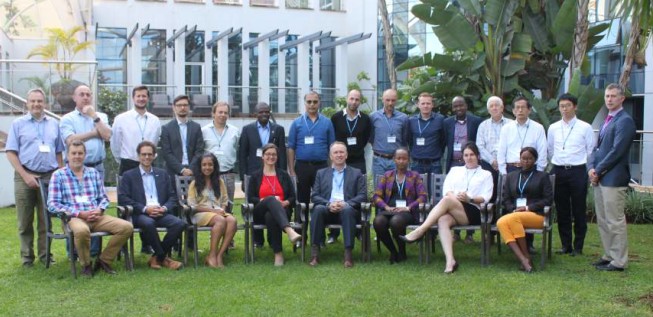
RDIS Organisation is taking part in the World Environment Day on 5th June 2018 by facilitating a workshop and some actions to #BeatPlasticPollution in Butare diocese.
- Details
- Parent Category: topnews
The RDIS Organisation is participating in the World Environment Day by facilitating some actions and a workshop in Butare diocese on Tuesday 5th June 2018, from 9:00 o’clock onwards. The participants will be composed of about 24 youths and some leaders, who are involved in our ongoing waste management project, coming from all four dioceses of the Anglican Church in Rwanda, namely Kigeme, Shyogwe, Cyangugu and Butare.
Waste Management Project
- Details
- Parent Category: topnews
Project Synopsis:
African cities, towns and shopping centers are growing rapidly, however, hygiene and sanitation is questionable whereby people’s health is affected due to the poor collection, treatment, transportation, storage, and eventual disposal of waste. The prevailing increase in the level of urbanization in Africa is expected to continue in the future.
RDIS organization is therefore currently implementing a “Waste Management for Environmental Safeguard” project in Rwanda. The beneficiaries of the project are Church’s training centers, guest houses, schools and health centers. Special training is given to managers and personnel of these institutions and people, especially the youth, who are likely to influence others with knowledge and skills about waste management. Special waste bins and policies are distributed to these institutions.
See also:
- RDIS Organisation participation on World’s Environment Day 2018 to demonstrate its initiatives to fight Plastic Pollution
- RDIS Organisation is taking part in the World Environment Day on 5th June 2018 by facilitating a workshop and some actions to #BeatPlasticPollution in Butare diocese.
- Photoalbum: RDIS Actions on World's Environment Day 2018 -- BeatPlasticPollution
Please visit us or call us for more information!
Field visit by RDIS staff members in Cyangugu diocese, in January 2018
- Details
- Parent Category: topnews
From 24th to 26th January 2018, two senior staff members of RDIS went for a field visit in the area of the Anglican Church of Rwanda, Cyangugu diocese. As one can see in the few pictures below, all ongoing projects in this area are running well thanks to the good work of local RDIS staff members, stakeholders and the excellent leadership of the diocese.
1. Visit to the tree nursery beds which are located in Rusizi district:
Since many years ago RDIS is collaborating with government leadership especially at local levels (District, Sectors, Cells and Villages) in establishing, running and managing tree nurseries, which reach nearly half of the population of Rwanda from Gitarama (RDIS headquarter) to Cyangugu, i.e. the wide area of Southern and Western Provinces. This project is in line with the mission of RDIS organisation of safeguarding the environment and increasing production for sustainable and holistic development of the communities.
The tree nursery project produces tree seedlings, which are distributed freely to community members and institutions in the area. This successful project is implemented by RDIS organisation with support from Rwanda Aid.
By the end of December 2017 the project had distributed and aided to plant 200,000 tree seedlings for fruit and agro-forestry. Each tree nursery bed had 25,000 seedlings for agro-forestry, i.e. forestry and fruit trees.
The field visit was a good opportunity to meet with the sponsor of Rwandan Aid, Ms Alison Wright <
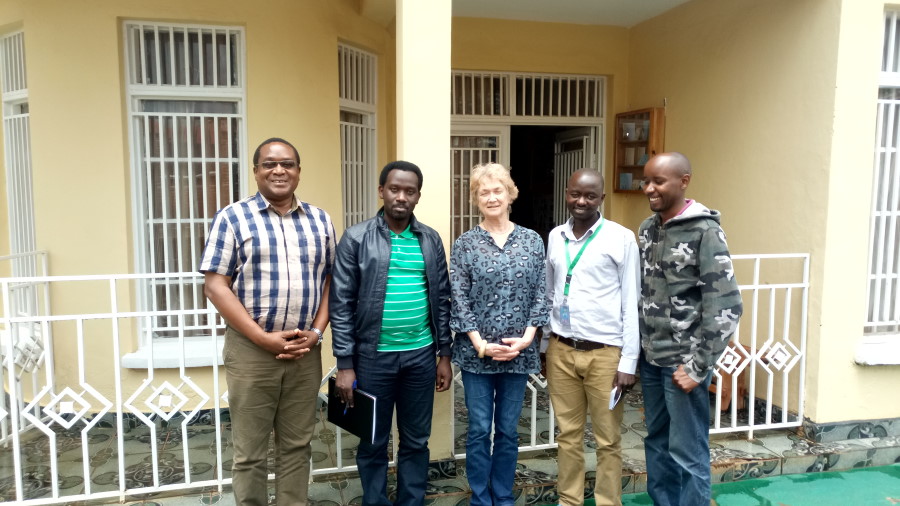
A group picture with Ms Alison Wright and some staff members of Rwanda Aid
Accomplishments and Call for Support 2017
- Details
- Parent Category: topnews
Dear Friends/Colleagues/Partners/Collaborators,
I cannot thank you enough for the work and accomplishments and achievements we got this year. Thank you all for your contributions!
In this year, we thought it would be ideal to share with you some of our accomplishments by this means - email and website. But more importantly, knowing that we are getting close to the end of the year, I would like to take this opportunity to wish you and your families a Merry Christmas and a prosperous New Year!
We have achieved a great deal despite of some challenges.
1. CCER - Improved Cook Stoves project:
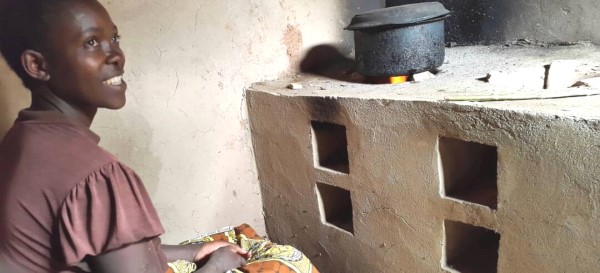
Among the major issues that challenge the environment in Rwanda is the wide use of open firewood stoves for cooking and for boiling drinking water. Similarly, the hunting, cutting, fetching and carrying of the tree logs and branches by man primarily living in rural communities have caused increasing deforestation despite the RDIS’s forestation and tree planting efforts. While the entire process is useful to enable households to have food on table, RDIS decided to come up with a project that would enable the local communities to continue using firewood for cooking in a sustainable and ecologically friendly way. This means we had to find an innovative solution of reducing the problem while promoting peoples welfare and standards of living. The only way to go was therefore to initiate Climate Change mitigation projects. Hence the planning and implementation of this project under the name: Carbon Emission Reduction for Self-sustainable Environmental Care Project (CCER).
Our Organisation
- Details
The Rural Development Interdiocesan Service (RDIS) with registration No. 13/RGB/NGO/2015 is an organization for promoting sustainable development in five dioceses of the Anglican Church of Rwanda: Butare, Cyangugu, Kigeme, Nyaruguru and Shyogwe. We do this by mobilizing the local church members to be involved in developing their local community, and so lifting themselves out of poverty.
The project’s coordination office is currently based in Nyamabuye Sector, Gitarama Cell, Muhanga District, a few kilometers from Gitarama town , Near WASAC and RBA Muhanga ,The organization is located in central Rwanda. RDIS’ activities are concentrated in the centre and the south-western part of the country where the four dioceses are located, serving nearly half of the Rwandan population. S.a. Organisational structure.
The project can be traced back to 1991 when three other dioceses were carved out of the then Butare Diocese from which the Rural Development Service, which had started in the 1960s, became an Inter-Diocesan Service, currently called RDIS.
The activities were disrupted by the 1994 genocide which caused massive destruction on RDIS’ project, taking the lives of many people including the then project coordinator and leaving behind formidable challenges: nearly half a million orphans, 1 in 4 women being widowed, and poverty being increased in many families.
The project operations were re-launched in 1995 following a meeting by the dioceses’ management under the present name of Rural Development Inter-Diocesan Service and a team of development workers started working from scratch.
Our Vision: A Holy Soul in a Healthy Body.
Our Mission: To safeguard environment, increase the production aiming at sustainable and holistic development
Our Values: Excellent Service, Transparency, Accountability, and Partnership.
Empowering Communities: A Journey Through RDIS's Sustainable Development Projects
- Details
For about three decades, the Rural Development Interdiocesan Service (RDIS) has been at the forefront of sustainable and holistic development, successfully implementing a multitude of interventions aimed at poverty eradication and environmental protection. Our approach is rooted in community engagement, where we mobilize villagers to take an active role in their development journey.
Through capacity building, training, and practical support, we address key areas that are pivotal to the growth and prosperity of the communities we serve. These areas include modern agriculture, environmental protection, income generation initiatives, water and sanitation, and the establishment of savings and credit cooperatives.
We invite you to explore our ongoing and past projects, each is a testament to our commitment to fostering sustainable development and empowering communities. Discover how RDIS is making a difference and join us in our mission to create a more sustainable and equitable world.
Page 11 of 12
Our Sponsors and Partners
RDIS collaborates with a diverse network of sponsors and partners who share its commitment to development, innovation, and community impact. These valued allies provide strategic support, resources, and expertise, enabling RDIS to implement sustainable projects, enhance service delivery, and drive positive change across Rwanda and beyond